![INTERVAL[S] by Marc Kandalaft](https://substackcdn.com/image/fetch/$s_!FEZW!,w_120,h_120,c_fill,f_webp,q_auto:good,fl_progressive:steep/https%3A%2F%2Fsubstack-post-media.s3.amazonaws.com%2Fpublic%2Fimages%2F4371cd8d-dff0-4e18-89ce-efd2fd5b4bf5_1280x1280.png)
![INTERVAL[S] by Marc Kandalaft](https://substackcdn.com/image/fetch/$s_!bvv7!,e_trim:10:white/e_trim:10:transparent/h_72,c_limit,f_auto,q_auto:good,fl_progressive:steep/https%3A%2F%2Fsubstack-post-media.s3.amazonaws.com%2Fpublic%2Fimages%2F09492407-6ed8-47c4-9cf9-10ee9e1c324d_1344x256.png)
Against Method – Creativity begins where control breaks
Order promises control. But too much order kills discovery.

I’ve written this in two versions. Part 1 is short and straightforward — a quick read that goes straight to the point. Part 2 goes deeper for those who want to understand the ideas in more detail.
PART 1
▶ Order promises control. But too much order kills discovery.
Philosopher Paul Feyerabend argued that knowledge grows through contradiction, not fixed rules. Chaos theorist Edward Lorenz showed that brilliant breakthroughs come from failures that reveal unexpected patterns.
In design, the best ideas emerge from tension. A color that feels wrong but works. A mistake that exposes an aesthetic truth. These aren’t errors—they’re openings where something new can grow.
Chaos is not the opposite of design.
It’s the ground from which design emerges.
Practically? Don’t lock the identity too soon. Let contradictions speak. Not all mistakes are equal—some teach little, others yield worlds.
▶ The goal isn’t control. It’s building the conditions where useful accidents become inevitable—and the architecture to recognize them when they arrive.
Interlude
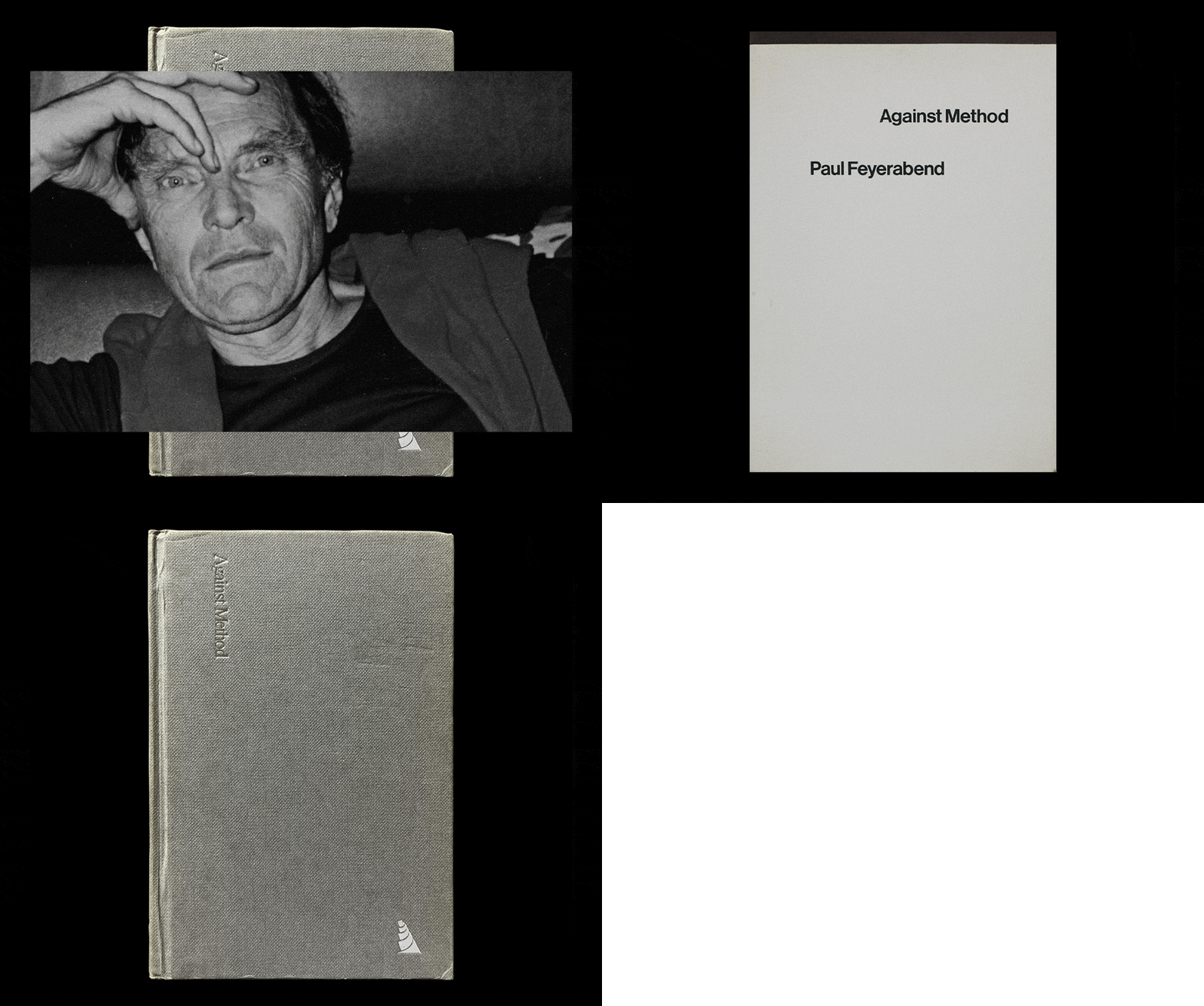
Against Method: What Feyerabend actually meant.
Against Method (1975), subtitled Outline of an Anarchistic Theory of Knowledge, is Paul Feyerabend’s most radical work. In it, he dismantles the very idea of a universal scientific method. Progress, he argues—whether in physics or philosophy—emerges not from strict adherence to method, but from transgression.
“The only principle that does not inhibit progress is: anything goes.”
—Paul Feyerabend, Against Method
Rules tend to exclude what they cannot explain. What begins as method often calcifies into dogma. Systems designed to liberate slowly become gates. Orthodoxy creeps in.
▶ Creativity—like science—begins to die the moment it forgets how to rebel.
For designers, this is not abstraction. We’re taught to obey grids, decks, and systems. But the most vital ideas don’t come from refinement. They come from rupture.
▶ The lesson: Don’t just resist chaos—use it. Let it reframe what the work is really asking of you.
Article to read: Paul Feyerabend and the dangers of a ‘scientific’ clerisy
PART 2
Against method.
How chaos outperforms control in creative work.
Order comforts. It promises clarity, control, and repeatability ▶ But in the realm of branding, design, and creative thinking, too much order suffocates. Systems harden. Curiosity fades. The unknown gets filtered out before it has a chance to speak.
Paul Feyerabend, one of the boldest philosophers of science, called for epistemological anarchism, a radical idea that no universal rules govern how knowledge evolves. He believed that science, like art, progresses not through strict methods, but through contradiction, messiness, and the rejection of orthodoxy. His most heretical claim? ▶ That “anything goes” is sometimes the only principle worth following.
For creatives, this isn’t an invitation to abandon structure. It’s a reminder that structure alone can’t generate breakthrough. The logic of a brand, like a theory, should evolve in response to friction, anomaly, and accident.
Edward Lorenz, the father of chaos theory, once described the anatomy of a “brilliant mistake.” First, something fails—but not in a predictable way. It fails spectacularly, revealing patterns we didn’t know existed ▶ Then, from that disruption, new insights emerge—deeper and more transformative than the original intention.
When strategy breaks
In branding and design, we often speak of strategy as if it were an algorithm. But the best ideas rarely arrive linearly.
▶ They emerge from tension—from the moment when the system reveals its limits and something unexpected is allowed to grow.
Consider what happens when a designer is developing a visual identity and accidentally exports a logo file at the wrong resolution. The degraded image creates an unexpected texture—a rawness that the polished version lacked. What began as a technical error becomes a stylistic direction: the “mistake” exposed an aesthetic truth the original strategy couldn’t see. The brand suddenly feels more honest, more urgent.
Or think of a typeface choice that initially feels wrong—too geometric for a warm brand, too playful for a serious one—but somehow creates precisely the productive tension the brand needed. The dissonance becomes the distinction. The anomaly becomes the signature.
These aren’t errors. They are epistemological openings—spaces where the system reveals its assumptions, and something new is allowed to grow.
▶ The “wrong” choice often works better because it breaks a pattern we didn’t realize had become a constraint.
Chaos as terrain, not enemy
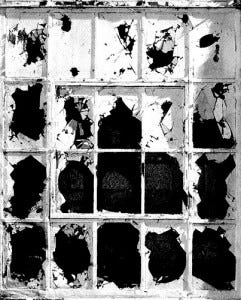
▶ Chaos is not the opposite of design. It’s the ground from which design emerges. But this requires a shift in how we understand creative practice itself.
This is precisely the terrain that some practitioners know how to navigate—often without naming it. Kandalaft does name it: Architecture Conceptuelle. It’s not a method, but a mindset—one that treats creativity as the result of carefully designed conditions. Not rigid frameworks, but architectures: conceptual systems that are precise enough to hold tension, yet open enough to let intuition and disruption collide.
His practice rejects templated “design thinking” in favor of conceptual navigation—a controlled oscillation between Dionysian impulse* (the unruly, instinctive drive) and Apollonian form* (the structure that clarifies and contains).
In this model, creativity doesn’t require mystery, but it does require architecture. Conditions that let the unexpected emerge, and make it legible when it does.
Chaos needs architecture. And architecture needs cracks.
What makes this approach distinct is its recognition that the core meaning of a brand can remain stable while its expression remains deliberately mutable. The identity doesn’t harden into a fixed system too early. Instead, it stays porous enough to absorb contradiction, to learn from misalignment, to let the wrong path reveal what the right one never could.
This isn’t theory for its own sake. It’s a working method that acknowledges what Feyerabend knew about science and what Lorenz proved about systems: real creative progress resists prediction. It rewards those who know how to read instability—not with blind faith, but with a feel for rhythm, timing, and emerging pattern.
The practice of useful accidents
What does this mean practically?
It means cultivating environments where useful accidents are more likely to occur. It means not fixing a brand’s identity too soon. Let the contradiction speak. Let the mismatch linger longer than comfort would allow. Let the detour show you what the direct route would have missed.
▶ Mistakes, when framed correctly, are not setbacks. They are research. And not all mistakes are equal: some cost a lot and teach little. Others—when noticed, honored, and shaped—yield entire worlds.
The designer becomes not just an executor, but a reader of patterns. Not only a solver, but someone who knows which problems to leave temporarily unsolved.
Better sensors, not perfect plans
▶ The goal is not to prevent failure, but to fail in ways that open doors. To build systems loose enough to register what they weren’t designed to find. To treat the unexpected not as a threat to control, but as information the process needs.
▶ True creative work doesn’t move in straight lines.
Like science, it moves through productive instability.
Those who learn to work with that—rather than against it—discover what no method could predict.
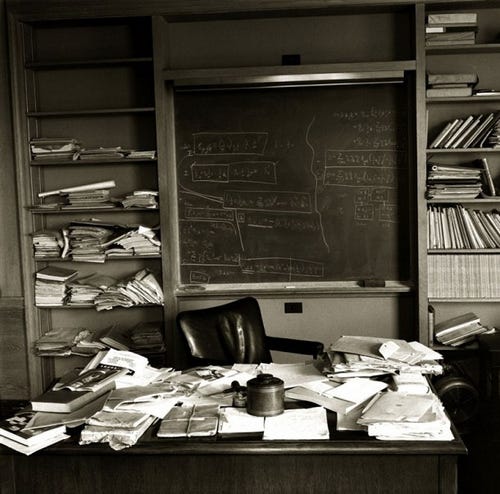
* Dionysian / Apollonian — These terms originate from Friedrich Nietzsche’s The Birth of Tragedy (1872), where he explores two opposing yet interdependent forces in art and life:
Dionysian refers to instinct, emotion, chaos, intoxication, and the dissolving of boundaries. It’s the wild, generative force—the impulse to break form, embrace disorder, and surrender to intuition.
Apollonian stands for structure, clarity, restraint, and reason. It’s the ordering force—the drive to shape, refine, and render the chaotic into something coherent.
Nietzsche saw great art—and by extension, any powerful creation—as the result of a tension between these two modes. One without the other leads to either shapeless chaos or lifeless perfection. Creativity lives in the interplay.